Antennas are where a lot of the "magic" in radio actually happens. Your radio can put out all the power it wants, but if the antenna isn't doing its job, that power isn't going anywhere useful.
The good news is that antenna basics aren't that complicated once you get past the terminology. In this post we'll go over a few of the most common antenna types you'll run into as a beginner, and how coax cable fits into the whole system.
What an Antenna Actually Does
At its core, an antenna converts electrical signals from your radio into radio waves that travel through the air, and vice versa on receive.
For an antenna to work efficiently, its length needs to relate to the wavelength of the signal you're using. This is why you'll hear antennas described as "half wave" or "quarter wave." Those numbers are describing the antenna's length relative to the wavelength of the frequency it's designed for.
Remember from the frequency and wavelength relationship:
c=λv
Where:
- c is the speed of light
- v is frequency
- λ (lambda) is wavelength
So a lower frequency means a longer wavelength, which means you need a physically longer antenna to work efficiently on that band. This is why HF antennas tend to be much bigger than the antenna on your VHF handheld.
Dipoles
The dipole is probably the most classic antenna design out there, and it's a great one to understand first because a lot of other antennas are basically variations of it.
A dipole is just two equal-length pieces of wire or metal, fed in the middle, with the feedline connecting right at that center point. The total length ends up being about half a wavelength for the frequency you're targeting.

A few things worth knowing about dipoles:
- They're usually installed horizontally, though vertical dipoles exist too
- They radiate most strongly off to the sides, not off the ends
- They're simple, cheap, and easy to build yourself
Dipoles are a great starting point because they're forgiving and well understood. If you want to learn how antennas behave, building a simple wire dipole is a good first project.
Vertical Antennas
Verticals work a bit differently. Instead of two elements running horizontally, a vertical antenna stands up, usually a quarter wavelength tall, and relies on either the ground or a set of radial wires to complete the electrical picture.
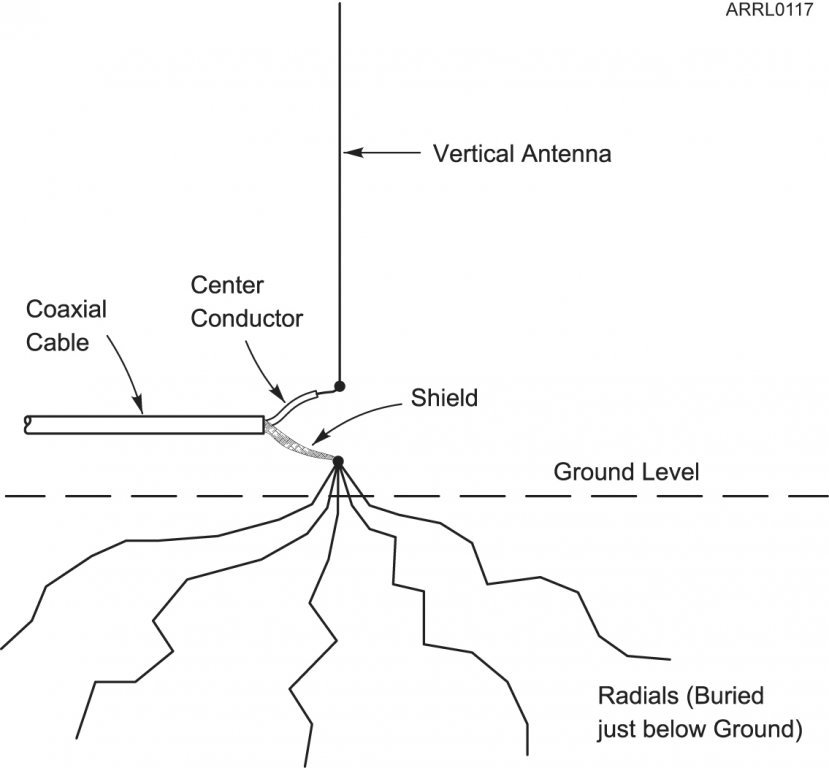
Some practical differences compared to dipoles:
- Verticals radiate their signal equally in all directions (omnidirectional), which is great if you don't know where the other station is
- They tend to take up less horizontal space, which makes them popular for smaller yards or portable setups
- Performance depends a lot on having a good ground system or radials, especially at lower frequencies
Verticals are common on mobile setups, base stations with limited space, and portable operations where you can't string up a long wire.
End-Fed Halfwave Antennas (EFHW)
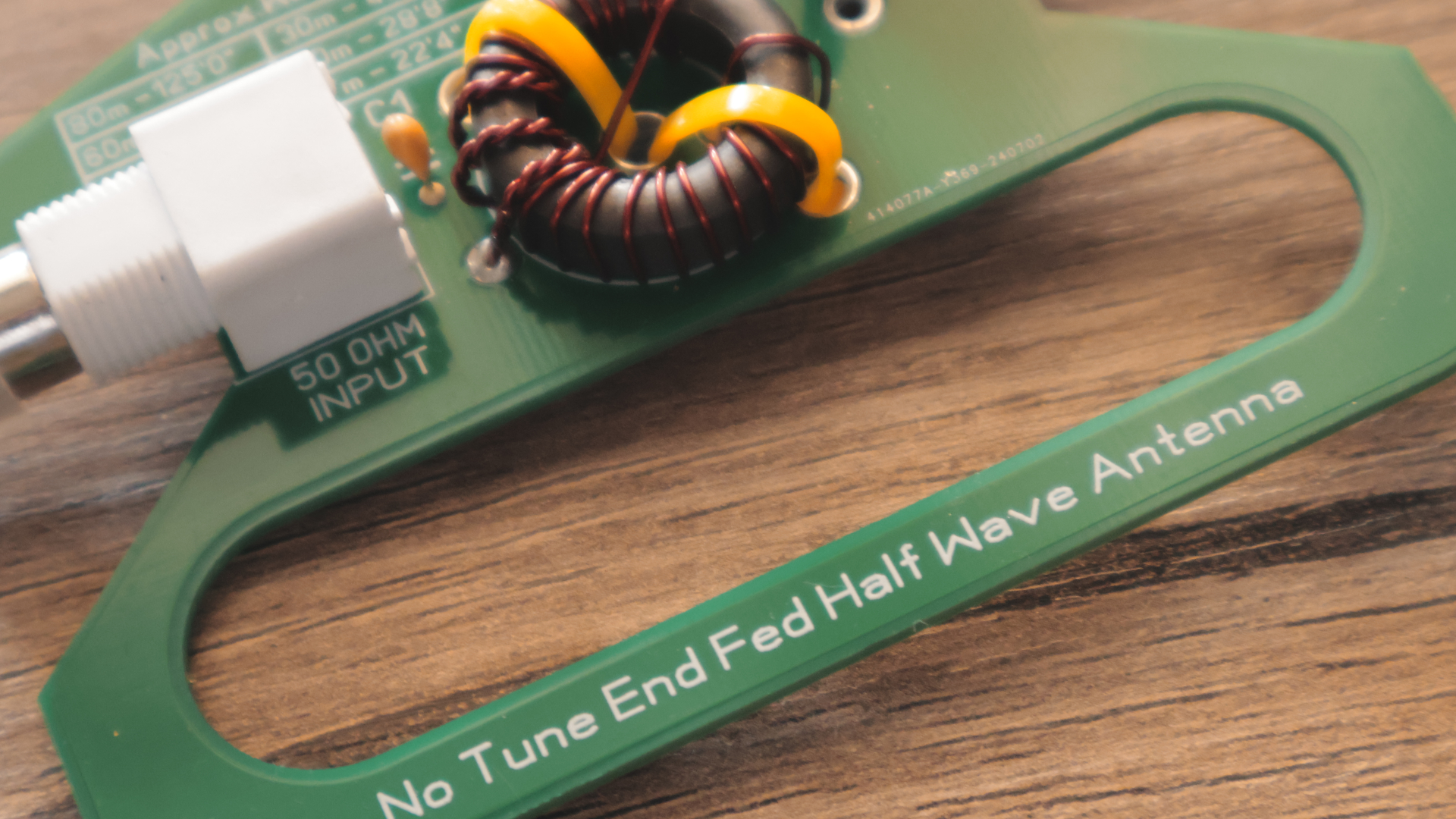
End-fed halfwave antennas, usually just called EFHW, have gotten really popular in the portable and QRP (low power) world, and for good reason.
Unlike a dipole, which is fed in the middle, an EFHW is fed at one end. This makes it a lot more practical to deploy because you only need one support point instead of two. You can throw one end up a tree, run the wire out at an angle, and you're on the air.

To make this work, EFHW antennas need a matching device (usually a small transformer called a 9:1 or 49:1 unun) at the feed point. Since the impedance at the end of a halfwave antenna is very high, this transformer brings it down to something your radio and coax can work with efficiently.
Why EFHWs are popular for portable use:
- Only one support point needed
- Lightweight and easy to pack
- Can work multiple bands with the right matching setup
- Quick to deploy and take down
The tradeoff is that the matching transformer adds a small amount of loss and complexity compared to a plain dipole, but for the convenience it offers, most portable operators think it's worth it.
Coax Cable and Radiating Elements
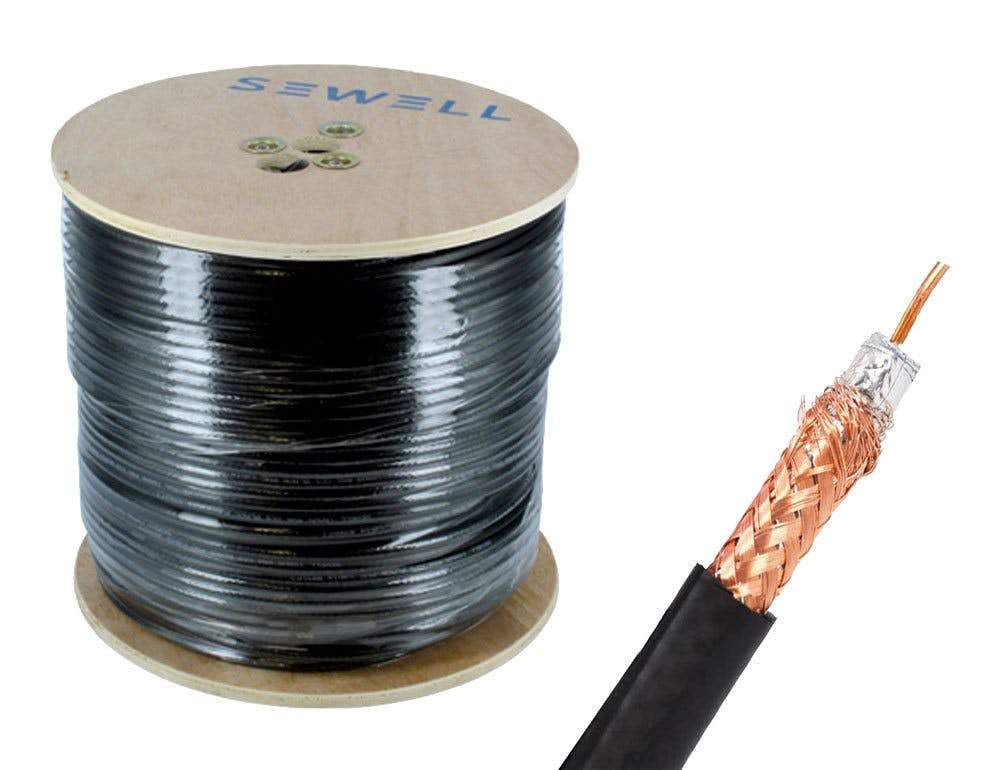
It's worth being clear about something that trips up a lot of beginners: coax cable is not supposed to radiate.
Coax is designed to carry your signal from the radio to the antenna (and back, on receive) without leaking that energy along the way. The actual radiating element is the antenna itself, whether that's a dipole leg, a vertical whip, or an EFHW wire.
If your coax does start radiating, that's usually a sign something is wrong, like a poor match at the antenna, or missing/incorrect use of a balun or choke where the coax connects to the antenna. This unwanted radiation can cause issues like:
- RF getting into your equipment (sometimes called "RF in the shack")
- Distorted or noisy audio
- An SWR reading that looks fine but doesn't reflect real-world performance
This is part of why baluns and chokes show up so often in antenna builds. They help keep the current on the coax shield in check, so the coax does its job of carrying the signal instead of acting like an accidental extra antenna element.
Putting It Together
When you're picking an antenna for a project, it usually comes down to a few practical questions:
- How much space do you have?
- Do you need to pack it up and move it around?
- Do you care more about directional performance or all-around coverage?
Dipoles are simple and reliable if you have the horizontal space. Verticals are compact and omnidirectional but need attention to grounding or radials. EFHW antennas are great for portable operators who want an easy one-point setup.
None of these designs are inherently "better," they just solve different problems. Once you understand what each one is doing electrically, picking the right one for your situation gets a lot easier.
Antennas are one of those topics that feels abstract at first but clicks pretty quickly once you build or use a few yourself. Start simple, pay attention to how your setup performs, and the concepts will start making a lot more sense.